Roofing Repair
What to expect from Roofing Repair, with the options and the process laid out clearly; everything is written for people outside the trade. Reach out to J. Riley Roofing & Gutters when you want to turn these questions into a plan; written notes keep the plan clear for everyone.

Understanding Roofing Repair
Prompt protection limits interior damage, and photos taken before and after help document what happened; temporary patches are meant to last days or weeks and not months. A roof is slick after rain, dew or morning fog, so reputable crews schedule repairs for dry, stable conditions; a ladder leaned on a gutter is not a safe way to reach a roof, however quick the job looks. Replacing an individual shingle requires lifting the pieces above it, removing old fasteners and sliding a new piece into place with the correct nailing; sealing strips need warmth to bond, so timing a repair for a mild day makes a difference. Dried-out caulk and rusted metal around openings are common culprits, and a good repair replaces the weak parts instead of smearing more sealant; a thick layer of sealant on its own rarely holds for long in the heat of the sun.
The rubber collar around a plumbing vent is a weak point, and when it splits, water runs down the pipe and into the house; checking the attic after a storm often shows a trail of dampness leading straight to a failing vent. Low-slope roofs are fixed by cleaning the area, patching or welding a membrane section and sealing seams and edges; ponding water on a flat roof is a sign that the repair may need to address drainage as well as the leak.
Sometimes the deck itself needs work, because soft, stained or sagging boards cannot hold fasteners and must be replaced before new roofing goes down; mold appears where moisture lingers, and drying the area is part of a complete repair. Fallen limbs can puncture decking and crush ridge lines, and repair begins with making the roof safe and watertight; when damage is widespread, a patchwork of repairs stops making sense and a bigger plan may be the wiser course.
Whether to repair or go further depends on the age of the roof, how far the damage spreads and how often problems have returned; a repair that fits the roof's condition makes sense, and one that ignores it wastes effort. A written description with photos is the strongest protection for an owner and a crew alike, because everyone knows what was agreed; no one should feel pressured to sign anything on the spot.
What our Roofing Repair work covers
Emergency Roofing Repair
The project type called Emergency Roofing Repair deals with fixing specific problems on a roof, such as damaged covering, failed flashing or loose edges; matching the existing roof covering is part of the planning; sealant is used sparingly and only where it makes sense.
Roof Leak Repair
A job described as Roof Leak Repair deals with leaks at flashing, valleys, vents, fasteners and worn roof covering; interior damage is checked and dried to prevent mold; notes on weather conditions help identify wind-driven leaks.
Roof Repair
The Roof Repair service is scoped around the building and the condition of its roof, and the details vary from property to property; questions about the process are welcome at any stage; a simple sketch of the roof helps everyone agree on the plan.
Storm Damage Roof Repair
Planning Storm Damage Roof Repair after an incident means assessing the roof, protecting the interior and then settling the lasting fix; a written plan explains what needs to be done and in what order; soft metals like vents and flashing show hail marks clearly.
How our Roofing Repair work goes
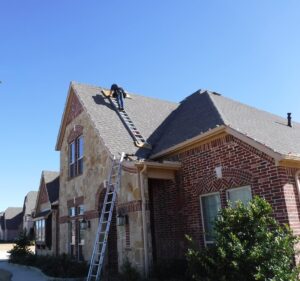
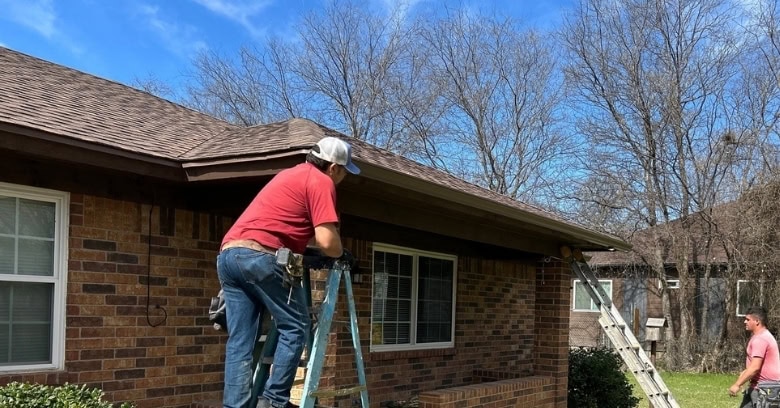
- Start with a careful roof assessment The contractor walks the roof, or surveys it by other safe means, and checks the surface, the flashing and the penetrations; attic or interior checks look for stains, damp insulation, daylight and poor ventilation; photos and notes are kept so the plan can refer back to each finding; a moisture meter or camera may be used on suspect areas.
- Compare options and plan the work Repair, restoration and replacement are weighed against the condition of the roof and the plans for the building; a written plan lists what will be removed, what will be installed and what will be repaired; ventilation and insulation questions are raised while the plan is still open; special orders are confirmed in writing.
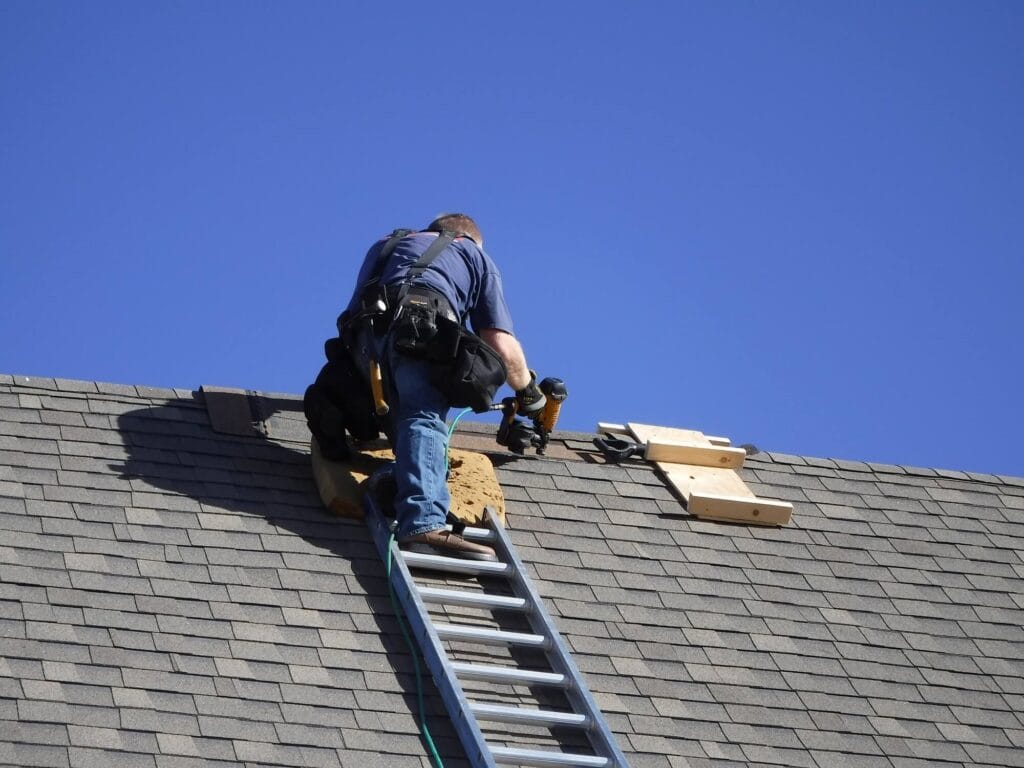
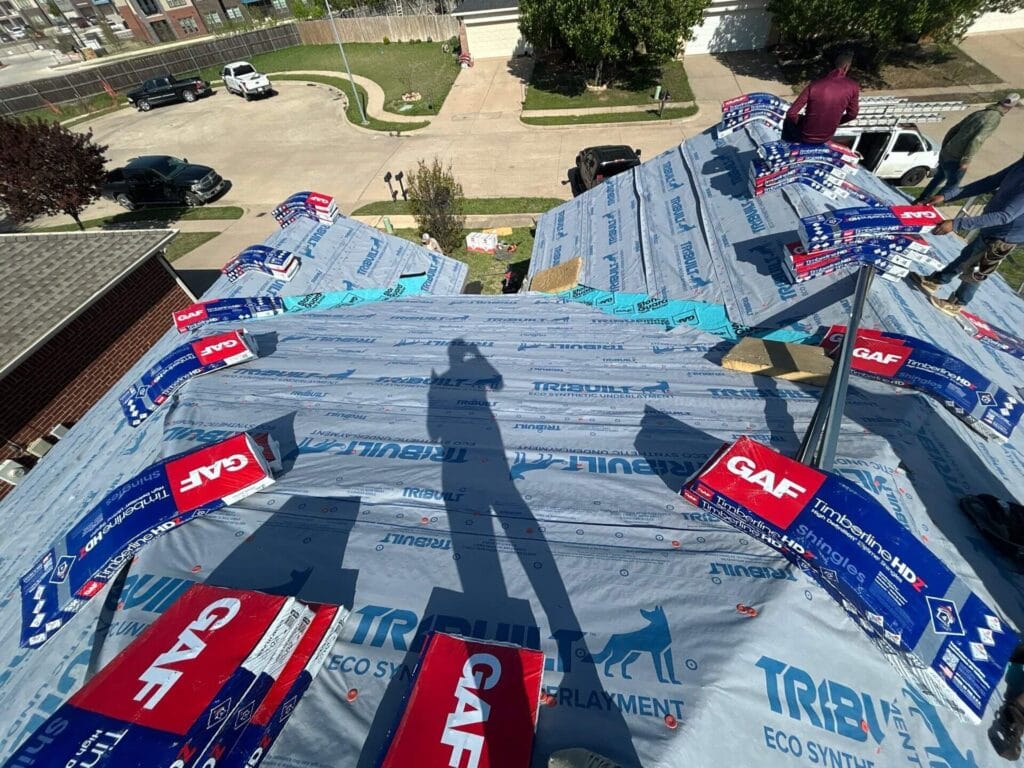
- Repair or replace the roof system The roof is stripped to the deck where required, any soft or damaged boards are replaced, and the surface is cleaned off; edges, ridges, valleys and penetrations are finished with care to keep water out and the lines straight; fasteners are driven at the correct depth and spacing; work proceeds one slope at a time so the roof is never left open.
- Final checks and cleanup The last stage is a careful check of the roof from the ridge to the eaves; waste material is hauled away and the landscaping is checked for damage; questions about care and inspection are answered at the walk-through; attic access is closed up and any interior protection is removed.
Roofing Repair options and materials
Low-slope roofing systems
Both systems are long-established options for low-slope roofs and can be repaired in sections; a contractor can explain how each system ages and how it is repaired; seams and corners are where flat roofs most often leak.
TPO and PVC membranes
Heat-welded seams create a continuous waterproof surface across the roof; seam quality is critical, so welded seams are checked as part of the installation; edge metal and drains are detailed to match the membrane.
Tile roofing
The weight and thickness of tile give a roof a solid, substantial appearance; repairs require matching tiles, so it helps to keep a few spares; colors run through clay and are surface-applied on concrete.
Cedar shingles
The roof is installed in overlapping courses with spacing that lets the wood breathe; treatments and underlayment details influence how the roof performs; moss and algae need to be brushed off to extend service life.
Concealed-fastener metal roofing
Standing seam roofs use long metal panels that interlock with raised seams running from ridge to eave; underlayment, clips and flashing details determine how well the roof performs; colors are baked on and meant to resist fading and chalking.
What customers say
Had a little damage to my roof from storms and called J Riley Roofing. They came out and was able to repair same day. They were honestly very nice people. I would highly recommend.
We had some storm damage and called J Riley Roofing to come out and evaluate the roof damage. Jason showed up in within less than two hours. He inspected the entire roof, took pictures and pointed all the issues that needed to be fix. The crew was very professional, quickly and they did a fantastic job cleaning up. He...
I recommend him to anyone looking for a fair price and guaranteed quality workmanship. He was very professional, personable, and courteous. He reviewed his estimate by detail and e-mailed me pictures so I could see the damage and what needed repaired. He knew it was going to rain on the weekend so in order to prevent...
J. Riley Roofing & Gutters were awesome people. My house had damage to the gutters after the tornado in Springtown. I called J. Riley and was very fortunate. They were able to come to my house the same day and give me a quote to replace my damaged gutters. I was even more fortunate because they were working near my...
I was nervous about finding an honest roofing company, but so glad I found J. Riley. Dasha was so very kind during schedule and answering a few questions I had about the process. Jason was punctual, honest, and informative. He inspected my roof, confirmed he could repair the leak (and install shielding to prevent...
Honest assessment of roof damage from Jason who was extremely knowledgeable with a very reasonable price for repairs. Quick turnaround from getting estimate to job complete. Absolutely zero upselling or pressure to replace the whole roof. Highly recommend Jason and J. Riley Roofing
Common questions about Roofing Repair
What are the first steps when a roof leaks?
Safety comes first, so avoid climbing onto a wet roof or touching wet electrical fixtures; a temporary cover over the leaking area can limit further damage until permanent repairs are made; mold can begin growing within days if the area stays damp.
How do shingles compare with metal roofing?
The two differ in weight, appearance, installation method and how they handle weather; local conditions such as heavy snow, hail or high winds can influence the choice; both materials need correct flashing to perform.
Should a roof be repaired or replaced?
A handful of damaged pieces can be replaced without touching the rest of the roof; the age of the roof is also a factor in the decision; the condition of the deck below the covering is part of the decision.
Which symptoms suggest a roofing problem?
Stains on ceilings, damp insulation and daylight visible in the attic point to leaks; an inspection can tell whether the issue is cosmetic or structural; photos taken from the ground can help track changes over time.
What should a roofing estimate include?
A thorough proposal describes the materials, the preparation and the finishing details; a contractor who explains each line gives you a better basis for a decision; a drawing of the roof helps everyone agree on the area covered.
How should storm damage to a roof be documented?
Keep records of what you see, including dates, photos and notes about interior leaks; a roofing contractor can inspect for damage you cannot see from the ground; do not climb onto a damaged roof, especially when it is wet.
Areas we serve for Roofing Repair
We provide Roofing Repair across 27 areas.
- Annaville Texas 940-456-9905
- Argyle Texas 940-456-9905
- Azle Texas 940-456-9905
- Boyd Texas 940-456-9905
- Briar Texas 940-456-9905
- Bridgeport Texas 940-456-9905
- Decatur Texas 940-456-9905
- Haslet Texas 940-456-9905
- Justin Texas 940-456-9905
- Keller Texas 940-456-9905
- Krum Texas 940-456-9905
- Lake Worth Texas 940-456-9905
- Lakeside Texas 940-456-9905
- New Fairview Texas 940-456-9905
- Northlake Texas 940-456-9905
- Ponder Texas 940-456-9905
- Reno Texas 940-456-9905
- Rhome Texas 940-456-9905
- River Oaks Texas 940-456-9905
- Roanoke Texas 940-456-9905
- Saginaw Texas 940-456-9905
- Sansom Park Texas 940-456-9905
- Springtown Texas 940-456-9905
- Trophy Club Texas 940-456-9905
- Watauga Texas 940-456-9905
- Westworth Village Texas 940-456-9905
- White Settlement Texas 940-456-9905
Our other services
Wondering what is right for your building?
A short discussion can save a lot of guesswork about materials and systems; J. Riley Roofing & Gutters welcomes questions at any stage of the project; each stage of the work is explained as it comes up.