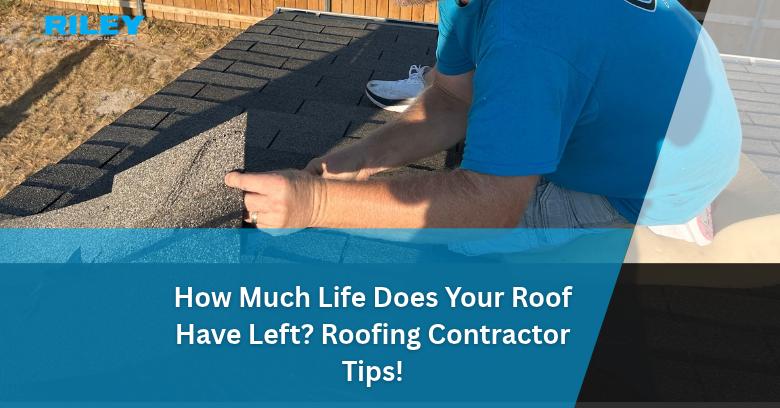
A roof rarely announces its retirement. It sheds water through one storm season after another, then gives up in a single gust or hailstorm, usually when the forecast calls for scattered showers. Most homeowners learn how much life was left only after a ceiling stain appears in the hallway. It is the question a roofing contractor hears more than any other: how many years do I have before this becomes a replacement?
The answer matters more now than it did a decade ago. Many Texas policies have moved roofs from replacement cost to actual cash value or an age-based depreciation schedule, and separate wind and hail deductibles, often 1% to 2% of the dwelling value, have replaced the flat amounts people remember. A worn roof that would have been fully covered ten years ago can now leave a homeowner in the Boyd, Texas, area holding a large share of the bill. Knowing where a roof sits on its timeline is a financial decision, not just a maintenance one.
This article walks through what determines real lifespan in hail country, how age destroys a shingle long before the granules disappear, what a thorough inspection should cover, how Texas insurance rules shape the outcome, and when repair still beats re-roofing. Good roofing services start with an honest assessment of the roof already up there.
How Long Shingles Really Last in Wise County
Nominal Serviceable Life Versus Hail-Belt Reality
Manufacturer figures describe a roof that never meets a storm. Three-tab shingles are rated for roughly 15 to 20 years, architectural or laminate shingles for 25 to 30, and designer or premium products for 30 to 50. Those numbers come from a lab, not from the US 81/287 corridor.
In Wise, Tarrant, and Denton counties, architectural shingles typically last 12 to 18 years before hail, wind, or heat ends the run early. Homeowners around Boyd and Springtown, Texas, often discover their 20-year roof reached the end at year 14, with no obvious failure visible from the driveway. That gap between the brochure and the field is the single most useful thing a roofing contractor can explain before a homeowner budgets for the next decade.
What Shortens the Clock
Several factors compress that timeline, and most of them are already in place the day the roof goes on:
- Attic ventilation below code minimums of 1/150 of attic floor area, or 1/300 with balanced intake and exhaust, which lets summer attic temperatures reach 140°F to 160°F and bakes the deck from underneath.
- Dark shingle colors on a low-slope, poorly vented roof.
- Missing metal drip edge at eaves and rakes, required by the residential code but frequently absent on older homes between Boyd and Springtown.
- Winter installations in weather that never reached the 40°F to 50°F range with sunlight, requirements that sealant strips need to bond.
- Heavy post oak and blackjack oak cover that traps moisture and debris on the north slopes.
Age Fails a Roof Before the Granules Do
Most homeowners watch the granules. They see black streaks in the gutter and assume that is the countdown clock. In practice, two other things fail first.
The sealant strip is the band of adhesive that bonds each shingle course to the one below. Under years of thermal cycling, it loses grip, and the shingle tab stops acting like part of a continuous surface. The mat underneath, the fiberglass layer carrying the asphalt, grows brittle as volatiles cook out. A 15-year-old roof can pass a casual visual inspection, with granule coverage that still looks acceptable, and still peel in sheets during the next 70 mph straight-line event.
That is why age alone belongs in the conversation. A brittle, unsealed roof isn't leaking yet, but it has no reserve left. Homeowners in Springtown, Texas, who are weighing a replacement against two more seasons of waiting should understand that the risk curve steepens sharply once the sealant strips let go, and that no repair restores that bond across the whole field.
Reading the Damage: Hail, Wind, and Everyday Wear
Hail Bruising and What It Is Not
Functional hail damage on architectural shingles generally starts around 1.25-inch stones. The signature is a bruise: a soft, dented spot where the impact fractured the mat and knocked granules down to black asphalt. Press on it, and it gives, like a bruise on fruit.
Two conditions get mistaken for it. Blistering is round, sharp-edged, and comes from moisture in the asphalt during manufacturing or from an overheated attic. Mechanical scuffing shows up in walkable paths and around the service equipment, with scraped granules but no fractured mat. A roofing contractor working in the Boyd, Texas, area sees all three in the same week during peak season, which runs March through June with April and May the heaviest for hail.
How Adjusters Count It
Most adjusters work in 10-by-10-foot test squares, one or more per slope. Roughly 8 to 10 qualifying hits inside that square generally supports replacement of that slope. It is a slope-by-slope determination, so a south-facing elevation can qualify while the north side does not. On acreage properties, metal outbuildings and detached garages are usually scoped as separate structures.
The Small Parts That Leak First
Neoprene pipe boots crack from North Texas ultraviolet exposure at roughly 8 to 12 years, and they are the most common leak source on a roof whose shingles are still sound. Step flashing at wall intersections, chimney counterflashing, and valley metal fail on their own schedules too. A leak does not automatically mean the roof is finished.
What a Roofing Contractor Should Check on an Inspection
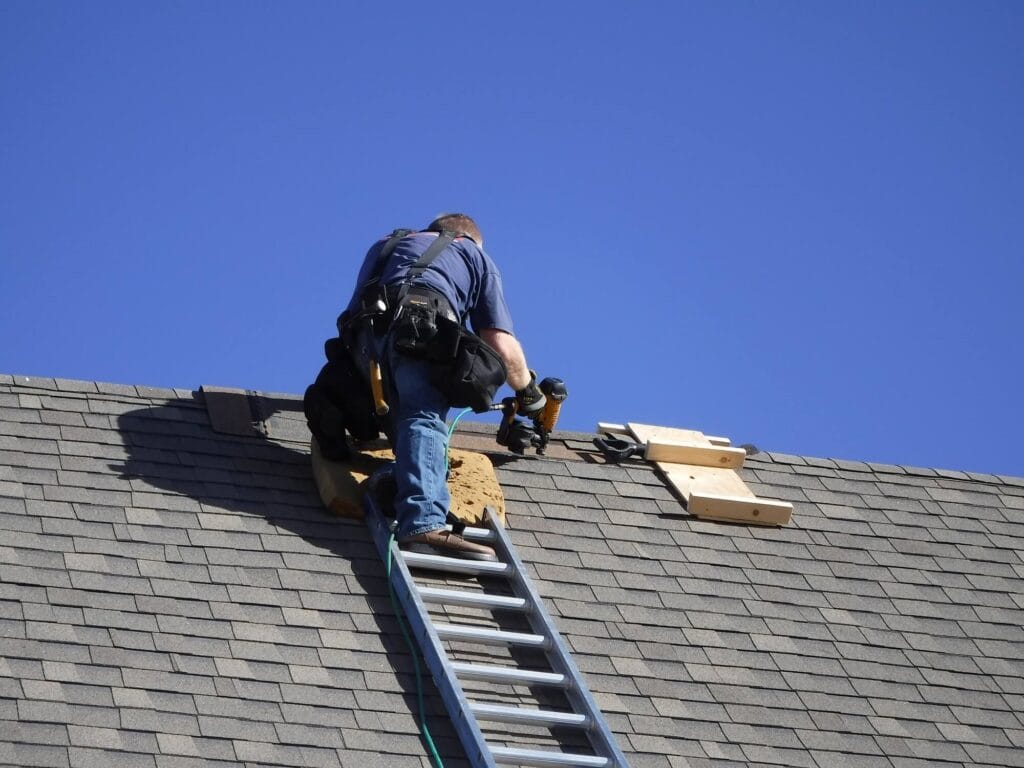
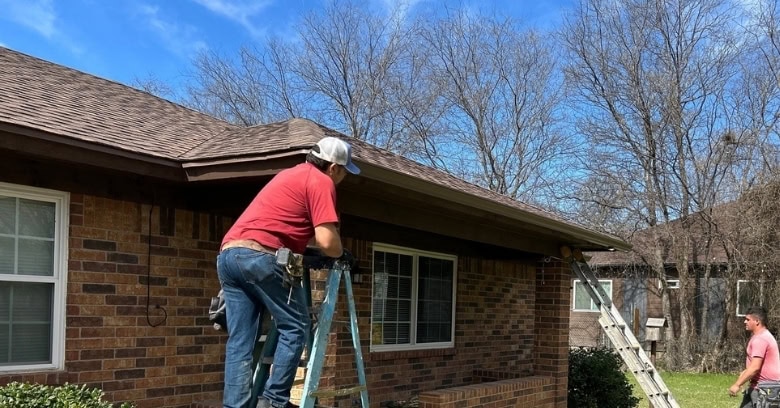
A meaningful inspection is more than a drone pass and a quote. A thorough visit covers, in order:
- Roof age and shingle type, verified against the shingle itself where possible, not just the homeowner's memory.
- Sealant strip condition, tested by lifting tabs on multiple slopes to see whether the bond releases cleanly or tears the mat.
- Test squares on each slope for hail, documented with photos and measurements.
- Penetrations: pipe boots, vents, flashing, and chimney details.
- Drip edge at eaves and rakes, plus the condition of the decking visible from the attic.
- Attic ventilation math, intake versus exhaust, and evidence of heat damage or condensation on the underside of the deck.
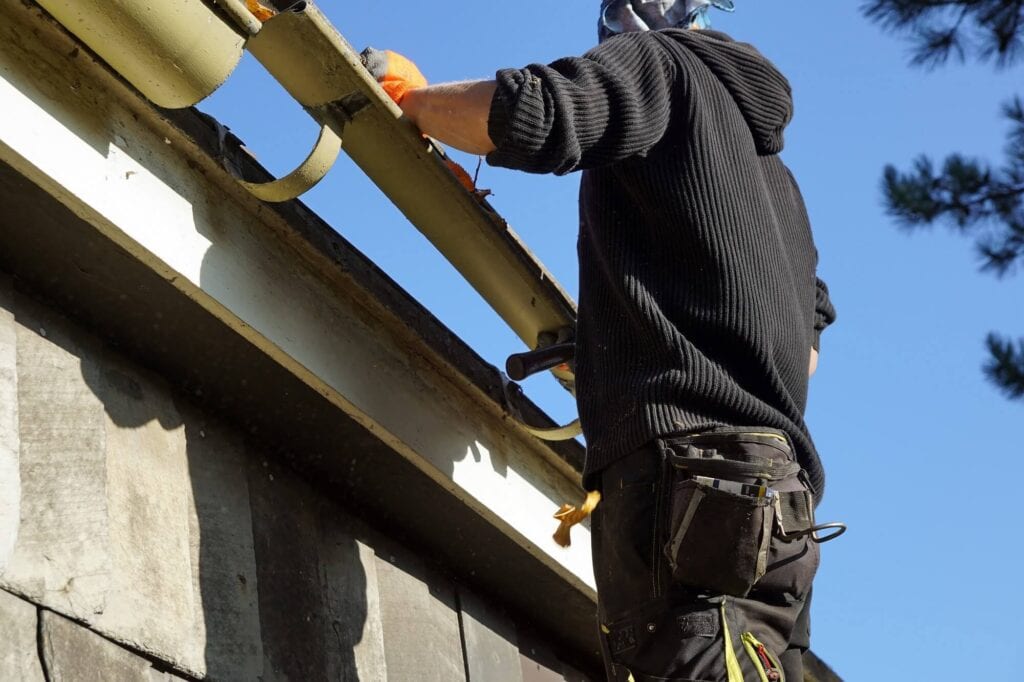
- Gutter condition and drainage, including downspout sizing.
Around Springtown and Azle, where mature trees are common, a roofing company should also note debris load and standing organic matter in valleys. The written result should tell a homeowner three things: the remaining service life, what would extend it, and what a replacement would involve. Any contractor who skips the attic has inspected half the roof.
Insurance Rules Texas Homeowners Should Know
Texas does not license roofing contractors at the state level. Anyone can order business cards, so the property owner must do the vetting: ask for a certificate of general liability and workers compensation coverage, a physical address, and manufacturer credentials.
Two statutes matter during claim season. Under House Bill 2102, a roofer may not negotiate or adjust an insurance claim on a homeowner's behalf unless separately licensed as a public adjuster. And Texas Insurance Code §707.003 makes it illegal to waive, rebate, or absorb a homeowner's deductible, so an offer to cover the deductible should end the conversation. Homeowners near Springtown, Texas, should treat both promises as warnings, not favors.
Deadlines are tight. Many policies require notice of loss within one year of the date of damage, and Chapter 542A requires 61 days of written notice before filing suit. Policy language controls, so read the declarations page. One upgrade worth pricing: Class 4 impact-resistant shingles rated under UL 2218 earn a wind and hail premium credit from most Texas carriers, commonly in the 10% to 30% range depending on the company.
Repair, Re-Roof, or Wait Another Season
Repair usually wins when the shingle field is under roughly ten years old, still sealed, and the problem is a penetration. Boot replacements typically run $150 to $450, and leak or flashing repairs commonly run $400 to $1,500. Replacement makes more sense when sealant strips have failed broadly, multiple slopes show hail damage, or the roof is already past its hail-belt life expectancy.
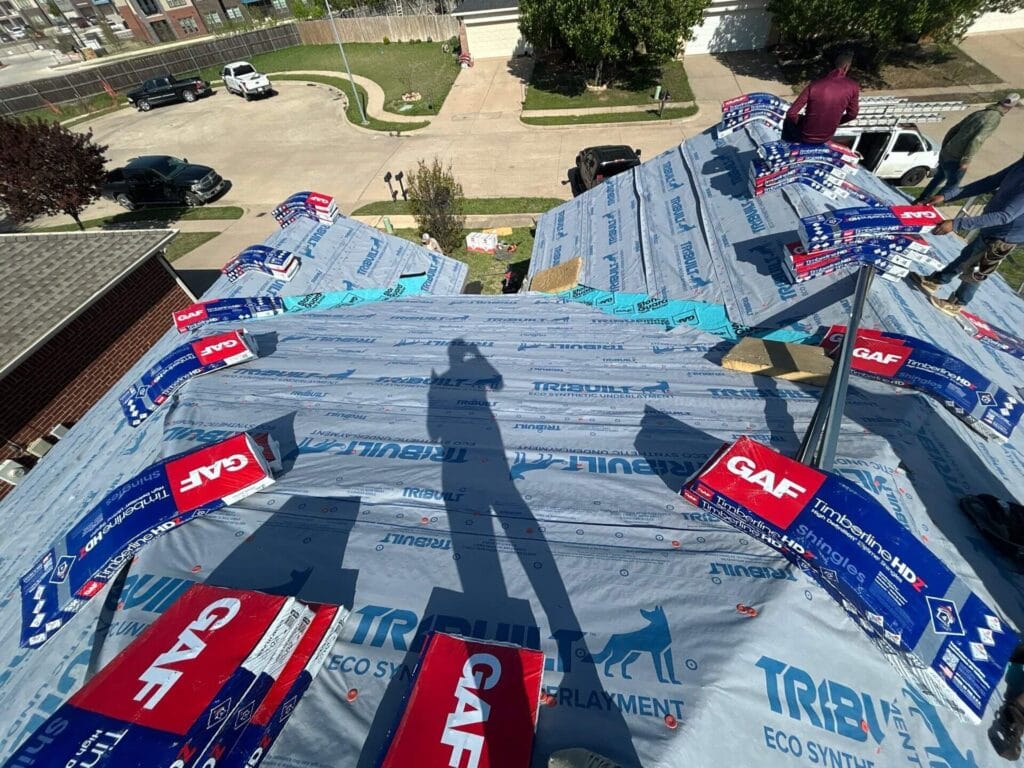
Across the DFW market, asphalt replacement runs roughly $4.50 to $9.00 per square foot installed, which puts a 25- to 35-square home commonly between $12,000 and $30,000. Pitch above 6:12, two-story access, extra layers to tear off, and decking replacement all push toward the top of that range. Bad decking is usually billed per sheet of 7/16-inch OSB, often $85 to $150 installed. A typical tear-off and re-roof takes one to two days, with three to four on large or steep homes. A roofing contractor serving the Boyd and Springtown, Texas, areas will also confirm permitting, since incorporated cities generally require a re-roof permit while unincorporated Wise County often does not.
Two details worth specifying on any replacement: a 6-nail high-wind pattern, which raises the shingle wind rating from 110 to 130 mph, and gutters sized for the site. Five-inch K-style is standard, 6-inch suits large or steep roofs, and 3x4 downspouts clear Cross Timbers leaf and acorn load far better than 2x3 during the October through December drop.
Wrapping Up
A roof's remaining serviceable life is not guesswork. It comes down to age, sealant condition, ventilation, and documented storm damage. Check those four, and the decision usually makes itself. Waiting out one more season is a reasonable choice on a sealed, well-vented eight-year-old roof. It is a gamble on a brittle 16-year-old one.
Peak hail season arrives fast in North Texas, and claim deadlines do not stretch. Homeowners in the Boyd, Texas, area should know where their roof stands before the first warning goes up, not after. Schedule an inspection with a qualified roofing contractor now, get the findings in writing with photos, and keep that report with your policy documents so the next storm finds you prepared. J. Riley Roofing & Gutters provides roofing services for home and business owners across the region!
Key Takeaways
- Architectural shingles rated for 25 to 30 years typically deliver 12 to 18 in the Wise County hail belt, so judge the roof by condition, not the brochure.
- Sealant strip failure and mat embrittlement end a roof's useful life before granule loss becomes obvious, which is why a 15-year roof can look fine and still blow off.
- Functional hail damage is a soft bruise with fractured mat, distinct from round, sharp-edged blistering or walked-on scuffing.
- Texas law bars a roofer from adjusting your claim without a public adjuster license and prohibits anyone from absorbing your deductible.
- Attic ventilation of 1/150 of floor area, or 1/300 with balanced intake and exhaust, protects the shingles you just paid for.
- Class 4 impact-resistant shingles often earn a wind and hail premium credit from Texas carriers, commonly 10% to 30%.
Related Articles
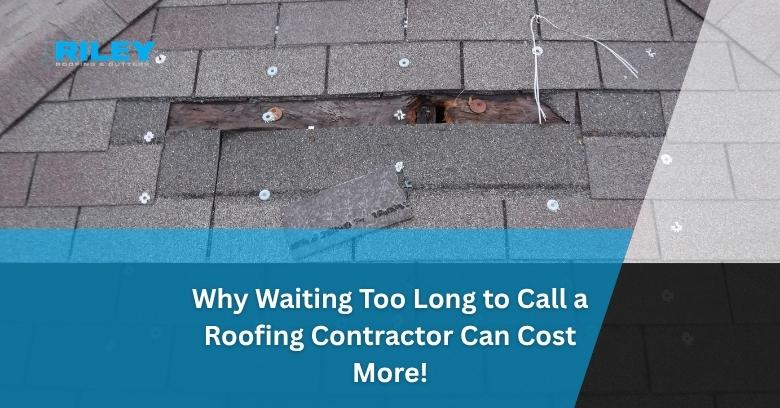
- Why Waiting Too Long to Call a Roofing Contractor Can Cost More!
- Roofing Contractor Tips to Spot Roof Problems Before They Grow!
- How to Decide Between Roofing Contractor Repairs or Replacement!
- How to Choose the Right Roofing Contractor for Your Home!
Frequently Asked Questions
How Can I Tell if I Need a Repair or a Full Replacement?
Look at the age and the sealant bond first. If the roof is under ten years old, shingles still bond when lifted, and the leak traces to a pipe boot or flashing, a repair is usually the right call. Broad sealant failure or hail on multiple slopes points to replacement.
Does Hail Damage Always Mean a New Roof?
No. Adjusters typically count hits inside 10-by-10-foot test squares, and roughly 8 to 10 qualifying hits per square supports replacing that slope. Light hail can leave cosmetic marks that do not shorten the roof's life, and determinations are made slope by slope.
How Long Does a Re-Roof Take?
Most residential tear-off and re-roof projects finish in one to two days. Large homes, steep pitches above 6:12, two-story access, or extra layers to remove can stretch that to three or four days. Weather delays are common during spring storm season.
Will Insurance Pay for a 15-Year-Old Roof?
That depends on whether your policy pays replacement cost or actual cash value. Many Texas policies have shifted older roofs to actual cash value or an age-based depreciation schedule, meaning you receive the depreciated value and cover the rest. Check your declarations page before a storm arrives.
Do I Need a Permit to Replace My Roof?
Usually yes inside city limits. Incorporated cities such as Boyd, Decatur, and Azle generally require a re-roof permit, while unincorporated areas of Wise County often do not. Verify with your city or the county before work begins, since requirements change.
Can My Roofer Handle the Insurance Claim for Me?
No, not unless that person is separately licensed as a public adjuster. House Bill 2102 prohibits a roofer from negotiating or adjusting your claim. A contractor can meet the adjuster on site, provide documentation, and explain the scope of damage.